Thank you!

Your request has successfully been sent.

Compressed Air Leaks: The Real Cost & How to Fix Them

bg_swf

Compressed Air Leak Management

Good industrial practice says you should always fix your leaks once identified. Natural gas leaks certainly present “imminent danger” issues if not addressed to both personnel and property.  Water leaks provide “slip hazards & safety issues” to plant personnel unless rectified. Compressed air however doesn’t seem to hold the same sense of urgency unless it is a massive air leak.

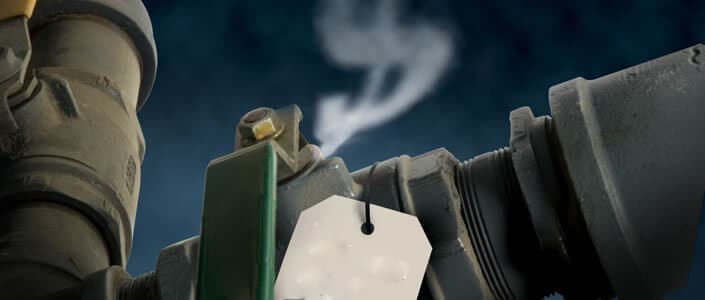
Every plant should subscribe to the development of a “Compressed Air Leak Management” program to assess and correct, on an ongoing basis leaks that are present in their compressed air system. Small leaks can turn into big leaks in a short period of time if not immediately addressed.  The decision needs to be made to either purchase your own ultrasonic leak detector or you can contract with a company that performs these types of services. The goal is to identify, tag and fix the leak as soon as possible. A respectable goal would be to insure no more than 10% of your total air consumption is lost to leaks. This is not a one and done plan but an ongoing strategy to insure your leak load is always under control.  Depending on the size of your plant you could divide the plant in quarters and every three months perform an ultrasonic leak audit, tag and fix the leaks in each quadrant of the facility. Many large plants try to audit their entire plant only to find the task of fixing all the leaks at once is overwhelming. We have seen leak tags a year and sometime two years later still hanging and never repaired.  The old saying “The best way to eat a 500 pound elephant is one bite at a time” certainly applies in this scenario.

The cost of one ¼” leak at 120 psi (assuming .05c/kwhr) is just under $10,000 a year. Any smart business person realizes the odds they have more than one ¼” leak are high and that $10,000 could add up very quickly if not addressed. The chart below shows both the amount of air lost depending on the size of the leak and the cost.  Remember the cost is assuming a low energy cost so if your blended power cost (generation & transmission) are at .10c/kwhr you would double your cost shown below to not fix leaks. Remember leaks leak 24/7 unless you turn your compressed air system off each night which many companies can’t or don’t think to do.

Picture1

Please refer to the handy chart below to use as a discussion point with your team on evaluating your current leak load and what is the cost to your company by not taking corrective action.

We at Comairco can help you maximize your efficiency with both a data-logged air audit and or an Ultrasonic leak audit. If you determine you would like to purchase your own ultrasonic leak detector and would like some free friendly advice feel free to give us a call we will be more than happy to share information that will make your company energy efficient.

Frequently Asked Questions About Compressed Air Leaks

How much does a compressed air leak cost per year? A ¼” leak at 120 psi costs approximately $10,000 per year at $0.05/kWh, and up to $20,000 at $0.10/kWh — a more representative blended rate for many Canadian and U.S. facilities. Since most plants have multiple leaks running simultaneously, total annual losses can easily exceed $50,000 without a formal leak management program in place.

What percentage of compressed air is typically lost to leaks? Industry best practice sets the acceptable threshold at under 10% of total air consumption. In plants with no active leak management program, that figure often exceeds 20–30%, meaning the compressor is running unnecessarily for a significant portion of its operating hours — and you’re paying for every one of them.

How do you detect compressed air leaks? The most effective non-intrusive method is an ultrasonic leak audit, performed by a certified technician using an ultrasonic detector that identifies leaks without stopping production. Detected leaks are tagged for repair and prioritized by size and location. A data-logged air audit (7-day measurement) is also highly effective for quantifying total leak load during non-production hours.

How often should I perform a compressed air leak audit? For mid-to-large facilities, a recommended approach is to divide the plant into four quadrants and perform an ultrasonic leak audit on each quadrant every three months. This keeps the repair workload manageable and ensures full plant coverage once per year — without the overwhelming task of trying to fix everything at once.

Should I buy my own ultrasonic leak detector or hire a specialist? Both options are valid. Purchasing a quality detector makes sense for large facilities with frequent audits and dedicated maintenance staff. For smaller plants or those without in-house expertise, contracting with a specialist like Comairco is typically more cost-effective and provides the added value of certified interpretation and a formal audit report — which can also support energy rebate applications with local utilities.

Technical service

COMAIRCO offers an emergency compressed air maintenance and compressors maintenance service, 24 hours a day, 7 days a week. Our technicians are available around the clock to perform compressed air installation and compressors installation or repairs.

Find out more Camion Comairco